
Pamukkale opening hours, Hierapolis hours, best time to visit Pamukkale, Pamukkale 2026, Pamukkale travertines hours
Opening Hours & Best Time to Visit Pamukkale & Hierapolis
February 12, 2026
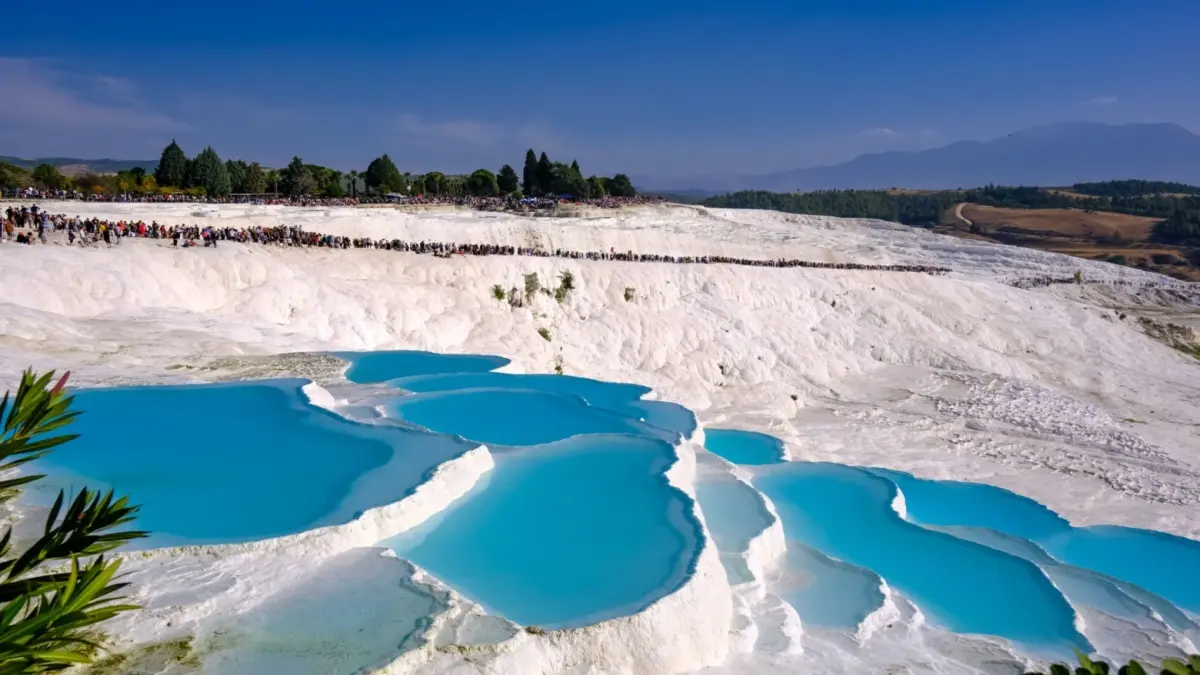
Pamukkale and Hierapolis are open daily year-round. Northern Gate 08:00–21:00, South Gate 06:00–23:00. Spring and autumn offer the best weather and fewer crowds. Plan your visit with our complete opening hours guide for the travertines, ancient pool, museum, and nearby Laodicea.
Pamukkale & Hierapolis Opening Hours 2026
Pamukkale and the ancient city of Hierapolis form a UNESCO World Heritage Site open every day of the year. There are no closed days. Opening and closing times vary by entrance gate and by season. The site has two main entry points—the Northern Gate (on foot) and the South Gate—each with different schedules. The Ancient Pool (Cleopatra's Pool), the Hierapolis Archaeological Museum, and nearby Laodicea also have their own hours. This guide helps you plan the best time to visit and make the most of your day at the Cotton Castle.
Northern Gate (On Foot) – Pamukkale Opening Hours
The Northern Gate is the classic entrance for visitors who want to walk down through the white travertine terraces. It is ideal for photographers and those who prefer to experience the terraces on foot from top to bottom.
- Opening: 08:00
- Closing: 21:00
The gate opens at 08:00, allowing early birds to enjoy the terraces before the midday heat and crowds. It closes at 21:00, giving plenty of time for sunset views. Ticket sales typically end before the gate closes—arrive in good time if you plan to enter late in the day.
South Gate – Extended Pamukkale Hours
The South Gate offers longer opening hours, making it a good option for early risers or visitors who want to stay until late evening.
- Opening: 06:00
- Closing: 23:00
If you are staying in Pamukkale village or arriving by car, the South Gate may be more convenient. The extended hours (06:00–23:00) allow for sunrise visits or evening strolls when the site is quieter.
Ancient Pool (Cleopatra's Pool / Thermal Pool) Hours
The famous Ancient Pool, where you can swim among Roman columns in mineral-rich thermal water, has separate opening hours and requires an additional ticket.
- Hours: 08:00 – 20:00
Plan 1–2 hours for a relaxing swim. The pool is busiest between 11:00 and 16:00—visit early or late for a more peaceful experience.
Hierapolis Archaeological Museum Hours
The museum is housed in the former Roman baths and displays artefacts from Hierapolis and the region.
- Hours: 08:00 – 20:00
Allow 45–60 minutes to explore the exhibits. The museum is included in the main Pamukkale & Hierapolis ticket.
Laodicea Ancient City – Nearby Attraction Hours
Laodicea, a short drive from Pamukkale, is worth a visit if you have extra time. It has the longest opening hours of the area.
- Hours: 08:00 – 23:00
Laodicea requires a separate ticket. The extended evening hours make it possible to combine a morning at Pamukkale with an afternoon or evening at Laodicea.
Best Time to Visit Pamukkale & Hierapolis
Choosing the right time to visit can make a big difference to your experience. Weather, crowds, and light all play a role.
Best Seasons: Spring and Autumn
Spring (March–May) and autumn (September–November) are widely considered the best times to visit Pamukkale. Temperatures are mild (typically 15–25°C), making it comfortable to walk the terraces and explore the ruins. Crowds are smaller than in summer, and the light is ideal for photography. April, May, September, and October are especially popular among experienced travellers.
Summer (June–August)
Summer brings high temperatures—often above 35°C—and peak tourist numbers. If you visit in summer, arrive at opening time (08:00) to avoid the midday heat and enjoy the terraces before they get crowded. Bring plenty of water, sunscreen, and a hat. Late afternoon (after 17:00) is also more comfortable as the sun weakens.
Winter (December–February)
Winter is cooler and sometimes rainy, but the site remains open and is much quieter. Daytime temperatures can drop to 5–15°C. Pack layers and waterproof gear. The white travertines against grey or blue winter skies can be strikingly beautiful, and you will have more space to yourself.
Best Time of Day
Early morning (08:00–10:00) is ideal in any season. The light is soft, temperatures are lower, and crowds are thinner. Sunset (around 18:00–20:00 in summer) is also magical—the terraces glow in the golden hour. Avoid 11:00–16:00 in summer if you are sensitive to heat.
Visitor Tips for Planning Your Visit
- Allow 4–6 hours for the main site (travertines + Hierapolis ruins + museum). Add 1–2 hours if you plan to swim in the Ancient Pool.
- Walk barefoot on the travertines to protect them. Wear comfortable shoes for the ancient city—paths can be uneven.
- Book tickets online in peak season to skip queues at the gate.
- Check official sources before your visit—hours can change for holidays or maintenance.
- Turkey Museum Pass holders can enter the main site without an additional ticket.
Summary: Pamukkale & Hierapolis Hours at a Glance
| Site | Opening | Closing |
|---|---|---|
| Northern Gate (on foot) | 08:00 | 21:00 |
| South Gate | 06:00 | 23:00 |
| Ancient Pool (Cleopatra's Pool) | 08:00 | 20:00 |
| Hierapolis Archaeological Museum | 08:00 | 20:00 |
| Laodicea Ancient City | 08:00 | 23:00 |
Ready to plan your visit? Check our ticket page for current availability and to book your Pamukkale & Hierapolis tickets online.

Related content
Benzer sayfalar