
Pamukkale official tickets, Hierapolis tickets, Pamukkale opening hours, Pamukkale visitor guide, Pamukkale 2026
Pamukkale & Hierapolis Official Tickets – Prices, Hours & Visitor Guide
February 05, 2026
Plan your visit to Pamukkale and Hierapolis with our official ticket and visitor guide. Find opening hours for the travertines, ancient city, thermal pool, and museum. Check current prices and book tickets online to skip the line. Best times to visit, practical tips, and everything you need for a smooth experience at this UNESCO World Heritage Site.
Pamukkale & Hierapolis Official Tickets – Complete Visitor Guide 2026
Pamukkale and the ancient city of Hierapolis form one of Turkey's most iconic UNESCO World Heritage Sites. The dazzling white travertine terraces, thermal pools, and well-preserved Roman ruins attract millions of visitors each year. Whether you are planning a day trip or a longer stay, this guide covers everything you need: official ticket information, opening hours, best times to visit, and practical tips for a smooth experience. For current prices and to book your tickets online, visit our ticket page.
What Are Pamukkale and Hierapolis?
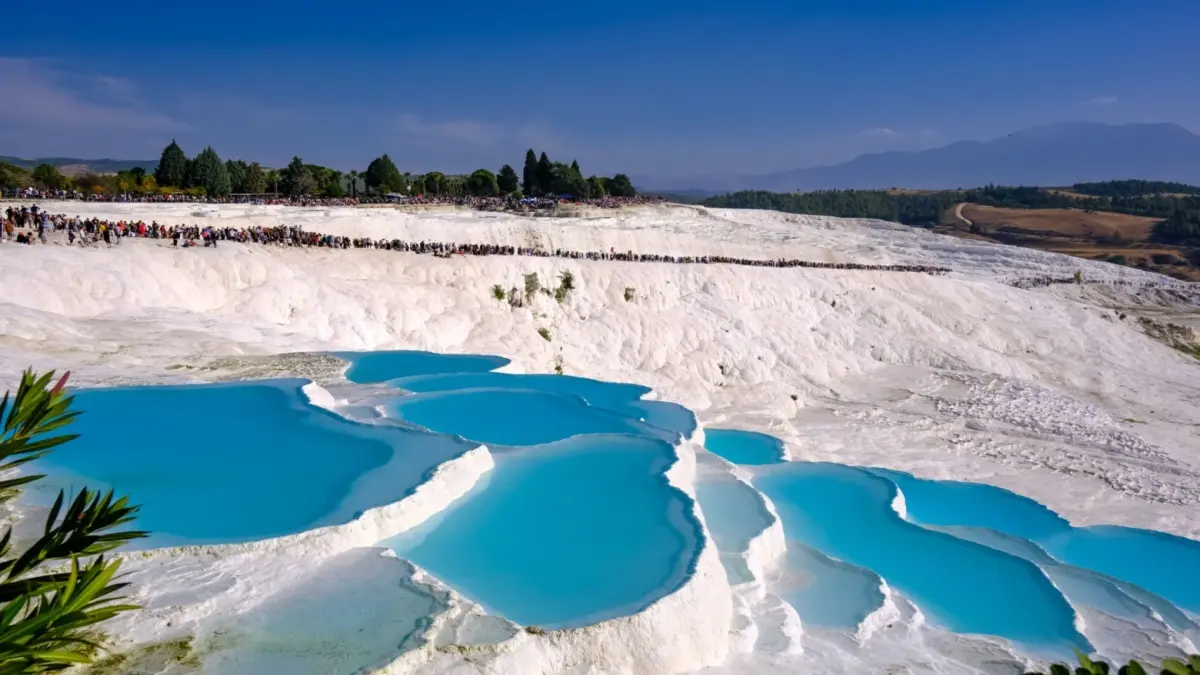
Pamukkale («Cotton Castle» in Turkish) is a natural wonder created by hot springs depositing calcium carbonate over millennia. The result is a series of white terraces and pools that cascade down the hillside. Hierapolis, the ancient Greco-Roman city built on top of the thermal springs, was a thriving spa town and religious centre. Today, both sites are managed together—a single ticket grants access to the travertines, the ancient city ruins, and the Hierapolis Archaeological Museum. The famous Cleopatra's Pool (Antique Pool) requires an additional ticket. Plan at least 4–6 hours to explore the main area comfortably.
Official Tickets for Pamukkale & Hierapolis
Official tickets for Pamukkale and Hierapolis are sold at the entrance gates and through authorised online platforms. Buying in advance helps you skip long queues, especially in peak season (April–October). A combined ticket typically includes access to the travertine terraces, Hierapolis ancient city, and the museum. The Ancient Pool (Cleopatra's Pool) is a separate add-on. Turkey Museum Pass holders can enter the main site without an additional ticket. For up-to-date prices, availability, and to secure your spot, check our ticket page.
Check Prices & Book Pamukkale Tickets →
Pamukkale & Hierapolis Opening Hours 2026
The site is open daily year-round. Opening hours vary by season and by entrance. The Northern Gate (on foot) and the South Gate have different schedules. Always confirm times before your visit, as they may change.
Northern Gate (On Foot)
- Opening: 08:00
- Closing: 21:00
Ideal for visitors who want to walk through the travertines from top to bottom. Arrive early to enjoy the terraces before crowds and midday heat.
South Gate
- Opening: 06:00
- Closing: 23:00
Offers extended hours for early birds and late visitors. Convenient if you are staying in Pamukkale village or arriving by car.
Ancient Pool (Cleopatra's Pool / Thermal Pool)
- Hours: 08:00 – 20:00
Swimming among ancient columns in mineral-rich thermal water is a highlight. Separate ticket required. Plan 1–2 hours for a relaxing swim.
Hierapolis Archaeological Museum
- Hours: 08:00 – 20:00
Housed in the former Roman baths, the museum displays artefacts from Hierapolis and the region. Allow 45–60 minutes.
Laodicea Ancient City (Nearby)
- Hours: 08:00 – 23:00
If you have extra time, Laodicea is a short drive from Pamukkale and worth a visit. Separate ticket required.
Best Time to Visit Pamukkale & Hierapolis
Spring (March–May) and autumn (September–November) offer mild weather and fewer crowds. Summer (June–August) can exceed 35°C; arrive at opening time to avoid the midday heat. Winter is cooler and sometimes rainy but quieter. Early morning (08:00–10:00) is ideal in any season for photography and a more peaceful experience.
Visitor Tips for Pamukkale & Hierapolis
- Footwear: Walk barefoot on the travertines to protect them. Wear comfortable shoes for Hierapolis ruins—paths can be uneven.
- Sun protection: Bring water, sunscreen, and a hat. Shade is limited on the terraces.
- Swimwear: If visiting the Ancient Pool, bring swimwear and a towel.
- Time: Allow 4–6 hours for the main site; add 1–2 hours for the pool.
- Book ahead: In peak season, book tickets online to skip queues.
- No cancellation: Tickets are generally non-refundable—confirm your plans before purchasing.
What to See in Pamukkale & Hierapolis
Start at the top and walk down through the travertines, or enter from the South Gate and work your way up. Key sights include the Travertine Terraces, the Hierapolis Theatre (one of the best-preserved in Turkey), the Necropolis, the Antique Pool, and the Archaeological Museum. The Sacred Pool area and Apollo Temple ruins are also highlights. Bring a camera—the white terraces against the blue sky are unforgettable.
How to Get to Pamukkale
Pamukkale is in Denizli province, about 20 km from Denizli city. Denizli has a bus station and airport (Çardak). Regular buses run from Istanbul, Ankara, Izmir, Antalya, and Bodrum. Many visitors combine Pamukkale with Ephesus or Cappadocia on multi-day tours. If driving, follow signs to Pamukkale from Denizli.
Get Your Pamukkale & Hierapolis Tickets
Ready to explore the Cotton Castle and ancient Hierapolis? Check our ticket page for current prices, availability, and to book your official Pamukkale & Hierapolis tickets online. Skip the line and make the most of your visit.

Related content
Benzer sayfalar