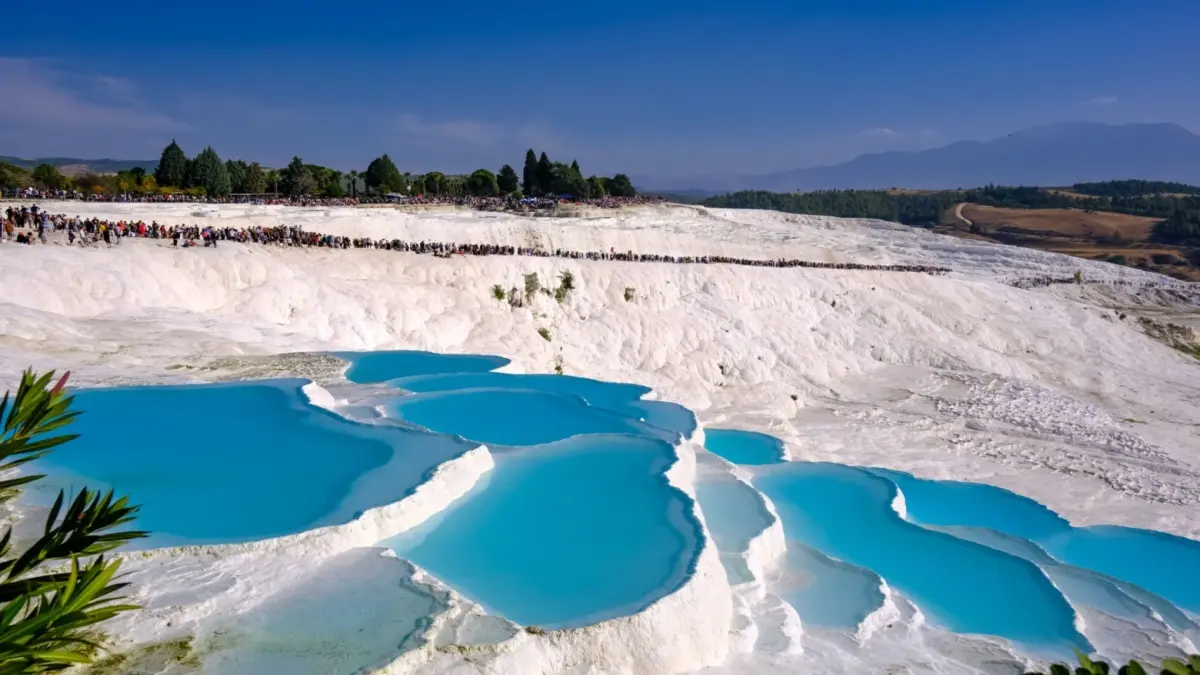
Discover lesser-known sites in Hierapolis—the Plutonium, Frontinus Gate, Martyrium of St Philip, ancient latrine, and more. All included in your Pamukkale & Hierapolis entrance ticket.
Beyond the famous travertines and ancient theatre, Hierapolis holds lesser-known sites that reward curious visitors. The Plutonium, Frontinus Gate, Martyrium of St Philip, and the ancient latrine are among the hidden gems you can explore—all included in your Pamukkale & Hierapolis entrance ticket. This guide covers what to see and how to secure your tickets in advance.
Hidden Gems in Hierapolis: What to See
While most visitors head straight for the theatre and travertines, these sites offer a deeper glimpse into ancient Roman and Byzantine life. All are part of the main archaeological zone and require no extra ticket.
1. The Plutonium (Pluto's Gate)
Near the Temple of Apollo, the Plutonium was a sacred cave sanctuary dedicated to Pluto (Hades), the god of the underworld. The cave emits toxic gases from an underground hot spring—ancient sources describe how animals brought near would perish. The ancients believed these vapors were "Pluto's breath." Today the site is fenced for safety, but you can view it from a distance. It remains one of Hierapolis's most mysterious attractions.

2. Frontinus Gate (Domitian Gate)
On the north side of Hierapolis, the Frontinus Gate is the best-preserved gate in the city. Built by Julius Frontinus, proconsul of Asia Minor (84–86 CE), it was dedicated to Emperor Domitian. The gate features two round towers and three openings. One tower remains in excellent condition. It marks the northern entrance to the ancient city and is often overlooked by visitors rushing to the theatre.
3. Martyrium of St Philip
An extraordinary octagonal structure built on the site where Saint Philip, one of Christ's twelve apostles, was martyred around 80 CE. The monument dates to the 5th century and features eight individual chapels marked with crosses. It served religious ceremonial purposes. In 2011, archaeologists discovered what is believed to be St. Philip's remains in a nearby Byzantine structure. The Martyrium sits on a hill northeast of the main ruins—allow extra time to reach it.
4. The Ancient Latrine
Hierapolis contains a remarkably well-preserved public latrine. The building has an elongated plan with two side entrances, constructed from travertine blocks. A waste-water channel on the floor connected to underground sewers. Despite earthquake damage over the centuries, the structure survives with its main features intact. It offers a rare glimpse into Roman urban infrastructure.
5. The Agora
One of the largest agoras ever discovered, dating to the 2nd century. It was surrounded by marble porticoes with Ionic columns on three sides and enclosed by a basilica on the fourth. The agora was the commercial and social heart of the city. Today the foundations and column bases give a sense of its scale.
6. Byzantine Gate and Early Christian Structures
A 5th-century Byzantine gate, built of travertine blocks and marble, marks one entrance to the site. Hierapolis flourished as a Christian center in late antiquity. Several early churches and chapels survive, often overshadowed by the more famous Roman ruins.
| Hidden Gem | Location | Highlights |
|---|---|---|
| Plutonium | Near Temple of Apollo | Sacred cave, toxic gases, fenced for safety |
| Frontinus Gate | North side of city | Best-preserved gate, Domitian era |
| Martyrium of St Philip | Hill northeast of ruins | Octagonal 5th-century structure |
| Ancient Latrine | Near main street | Well-preserved Roman public facility |
| Agora | Central area | 2nd-century commercial center |
| Byzantine Gate | Site entrance | 5th-century travertine and marble |
All Hidden Gems Included in Your Ticket
Every site listed above is included in the main Pamukkale & Hierapolis entrance ticket. No separate ticket or add-on is required. One ticket gives you access to the travertines, theatre, necropolis, and all these hidden gems. Cleopatra's Pool is the only attraction that requires a separate add-on ticket.
Planning a visit? Get your Pamukkale & Hierapolis entrance tickets online and skip the queue.
Pamukkale & Hierapolis: Opening Hours 2026
All sites share the same opening hours:
- Summer (April 1 – October 31): 08:00 – 19:30. Last entry 18:30.
- Winter (November 1 – March 31): 08:00 – 17:30. Last entry 16:30.
The site is open daily. Allow 5–6 hours if you want to explore both the main attractions and these hidden gems at a relaxed pace.
How to Find the Hidden Gems
Most are along or near the Colonnaded Street. Enter at the North Gate and walk south: you'll pass the Frontinus Gate, necropolis, theatre, Temple of Apollo and Plutonium, latrine, and agora. The Martyrium of St Philip requires a detour northeast—follow the signs or ask at the site. A map at the entrance helps; pick one up or use your phone to navigate.
Visitor Tips for Exploring Hidden Gems
- Allow extra time—these sites are spread across the plateau; rushing means you might miss them
- Stay on designated paths—do not climb on ruins or enter fenced areas (e.g., Plutonium)
- Bring water and sunscreen—shade is limited between sites
- Wear comfortable shoes—uneven terrain and marble paths
- Combine with main attractions—see the theatre and travertines on the same visit
How to Get Your Pamukkale & Hierapolis Tickets
Buying your entrance tickets online saves time and guarantees entry. Skip the queue at the ticket office and go straight to the entrance with your mobile or printed ticket. We offer official Pamukkale & Hierapolis entrance tickets with instant confirmation. Cancellation policy: Tickets are non-refundable once purchased (no cancel).
View Pamukkale & Hierapolis Tickets →
Frequently Asked Questions
What are the hidden gems in Hierapolis?
Lesser-known sites include the Plutonium (Pluto's Gate), Frontinus Gate, Martyrium of St Philip, the ancient latrine, the agora, and the Byzantine Gate. All are included in your entrance ticket.
Is the Plutonium safe to visit?
The Plutonium emits toxic gases and is fenced for visitor safety. You can view it from a distance but must not enter the cave or cross barriers.
Are the hidden gems included in the Pamukkale ticket?
Yes. All these sites are part of the main Pamukkale & Hierapolis entrance ticket. No separate ticket is required. Only Cleopatra's Pool needs an add-on ticket.
How long does it take to see the hidden gems?
Allow 1–2 extra hours beyond the main attractions. The Martyrium of St Philip requires a detour; the others are along the main walking route.
Can I buy Pamukkale tickets online?
Yes. Buying Pamukkale & Hierapolis tickets online lets you skip the queue and guarantees entry. You'll receive instant confirmation. Tickets are non-refundable (no cancel policy).
Ready to Discover Hierapolis's Hidden Gems?
Beyond the travertines and theatre, Hierapolis holds fascinating lesser-known sites. Plan your visit, allow time to explore, and secure your entrance tickets in advance for a smooth, queue-free experience.